ALT exists in various cells, especially in liver cells, followed by kidneys, myocardium and skeletal muscles. When there is substantial damage to the organs of the body, ALT can increase. In liver cells, most of ALT exists in the cytoplasm.
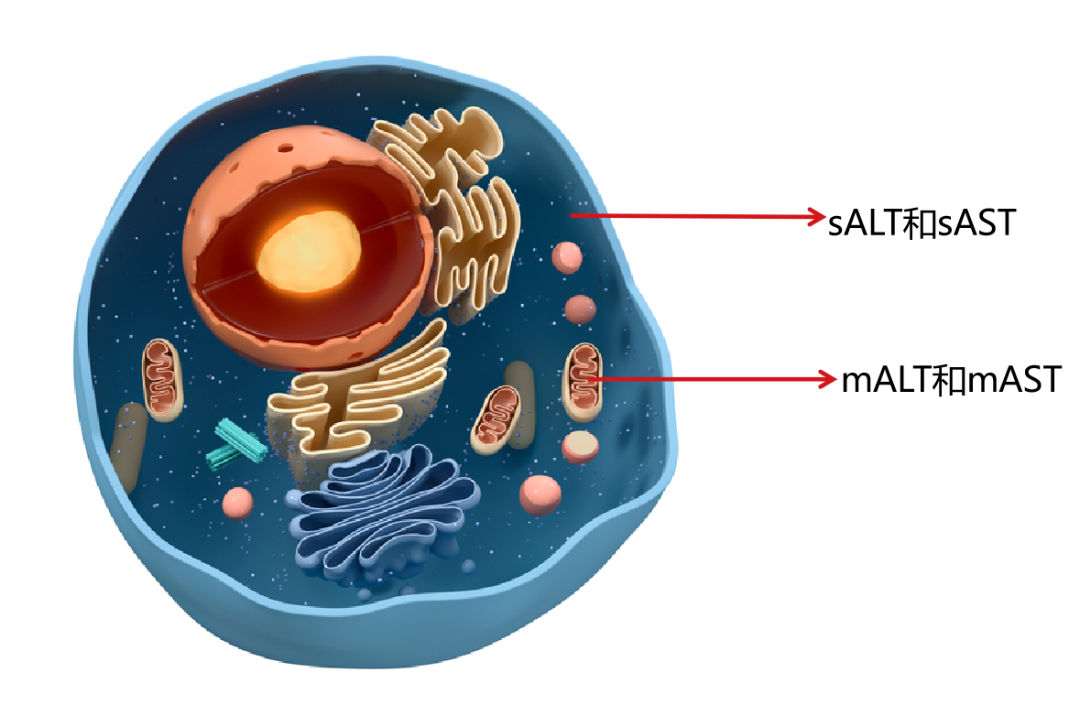
ALT has two isoenzymes, sALT and mALT, which exist in the liver cytoplasm and mitochondria respectively. sALT accounts for 80% to 90% of the total activity of ALT. When liver cells are damaged and the membrane permeability changes, ALT can be quickly released from the cell into the peripheral blood.
ALT is an enzyme that catalyzes the process of converting glutamate into alanine through transamination. The content of transaminase in the liver is about 100 times that in the blood, and the concentration of ALT in hepatocytes is 1000~5000 times higher than that in serum. Under normal circumstances, as long as a small amount is released into the blood, the activity of the enzyme in the serum can be significantly increased.
When the permeability of the liver cell membrane changes, ALT overflows from the cell into the circulating blood. As long as 1% of the liver cells are necrotic, the enzyme activity in the blood can be increased by 1 times. Therefore, transaminase, especially ALT, is a sensitive marker of acute liver cell damage. Compared with AST (aspartate aminotransferase), ALT is still more sensitive and specific, and has greater clinical practical value.
The impact of transaminase changes
Under normal circumstances, the content of ALT and AST in serum is very low. When liver cells are damaged, the permeability of the liver cell membrane increases, and the ALT and AST in the cytoplasm are released into the blood, causing the ALT and AST in the blood to increase.
It should be noted that the increase of ALT and AST is not limited to liver disease. Acute soft tissue injury, strenuous exercise, pregnancy, eating, drinking, staying up late, drugs, excessive fatigue or eating greasy food can cause transient increase of ALT and AST.
Hepatitis
In acute hepatitis, ALT increases significantly, and the level is parallel to the severity of the clinical condition. AST/ALT<1, that is, the DeRitis ratio is <1, and ALT is often the last enzyme to drop to normal in the recovery period of hepatitis. It is a good indicator to judge whether acute hepatitis has recovered or not.
It should be mentioned here that the degree of ALT increase is not necessarily proportional to the degree of liver cell damage. In acute severe hepatitis, due to the large-scale necrosis of liver cells in a short period of time, ALT in the blood gradually decreases, bile metabolism is abnormal, bilirubin levels increase, and transaminase rapidly decreases due to large-scale consumption. The phenomenon of "enzyme-bile separation" occurs, which is often a precursor to liver necrosis.
Fatty liver disease
Fatty liver disease is a clinical pathological syndrome characterized by excessive fat storage and fatty degeneration in liver cells. Clinically, it is divided into non-alcoholic fatty liver disease and alcoholic fatty liver disease according to whether there is long-term excessive drinking.
Non-alcoholic fatty liver disease (NAFLD) includes simple fatty liver disease and its evolved fatty liver hepatitis, fatty liver fibrosis and cirrhosis. It is one of the most common chronic liver diseases in my country.
Clinically, there are non-specific symptoms such as fatigue, upper abdominal discomfort, and dull pain in the liver area. Laboratory tests may show elevated transaminases. Usually, individuals with mildly elevated AST/ALT levels should highly consider NAFLD. Unlike alcoholic liver disease, in general, the ALT level of NAFLD is higher than the AST level, and the transaminase is rarely >300U/L, but there is no unique increase pattern of ALT and AST.
Alcoholic fatty liver disease is a chronic liver disease caused by long-term drinking. It manifests as fatty liver in the early stage, and then develops into alcoholic hepatitis, alcoholic liver fibrosis and alcoholic cirrhosis. Clinically, it manifests as fatigue, loss of appetite, discomfort in the right upper abdomen, nausea, vomiting, etc. 70% to 80% of patients have elevated transaminases.
If alcoholic hepatitis occurs, it will induce extensive hepatocyte necrosis and even liver failure. Serum transaminases are sensitive indicators of liver damage caused by ethanol. In alcoholic hepatitis, AST increases more significantly than ALT, AST/ALT>2, that is, the DeRitis ratio>2, but the degree of increase in AST and ALT is not necessarily proportional to the degree of liver damage.
Drug-induced liver disease
In acute hepatitis caused by drug-induced liver disease, transaminases increase, among which ALT increase is more significant than AST for diagnosing drug-induced liver disease, and has higher sensitivity, but AST increase indicates severe damage.
Cirrhosis
In the compensated stage of cirrhosis, most of them are normal. In the active stage of cirrhosis, ALT and AST are slightly to moderately elevated, and ALT is generally more obvious. However, when hepatocyte necrosis is severe, AST activity is often higher than ALT, AST/ALT≥2, that is, the DeRitis ratio≥2. (The normal ratio is about 1.15)
Liver cancer
During the progression of liver cancer, a large number of cancer cells die. Necrotic liver cells release a large amount of transaminases, sometimes up to several thousand. Necrotic liver cells release a large amount of ALT and AST, and the AST value increases more. Therefore, in liver cancer, AST/ALT ≥ 3, that is, the DeRitis ratio ≥ 3.
The liver itself is a very large metabolic organ with a very strong compensatory ability, so not all liver cancers will cause elevated transaminases. Clinically, liver cancer patients may have normal liver function and normal transaminases.
ALT and AST are the two most important indicators in liver function tests, which can be used to reflect the degree of liver damage in different situations. Of course, we cannot simply judge the improvement of the disease based on the high or low values. We need to conduct a comprehensive analysis based on the clinical symptoms, signs and other disease developments.