Food fraud not only undermines consumer trust but can also pose significant threats to public health. Digital Polymerase Chain Reaction (dPCR) technology, known for its high precision in quantifying nucleic acids, is increasingly becoming an indispensable tool in the food testing industry.
🚀 Technological Highlights
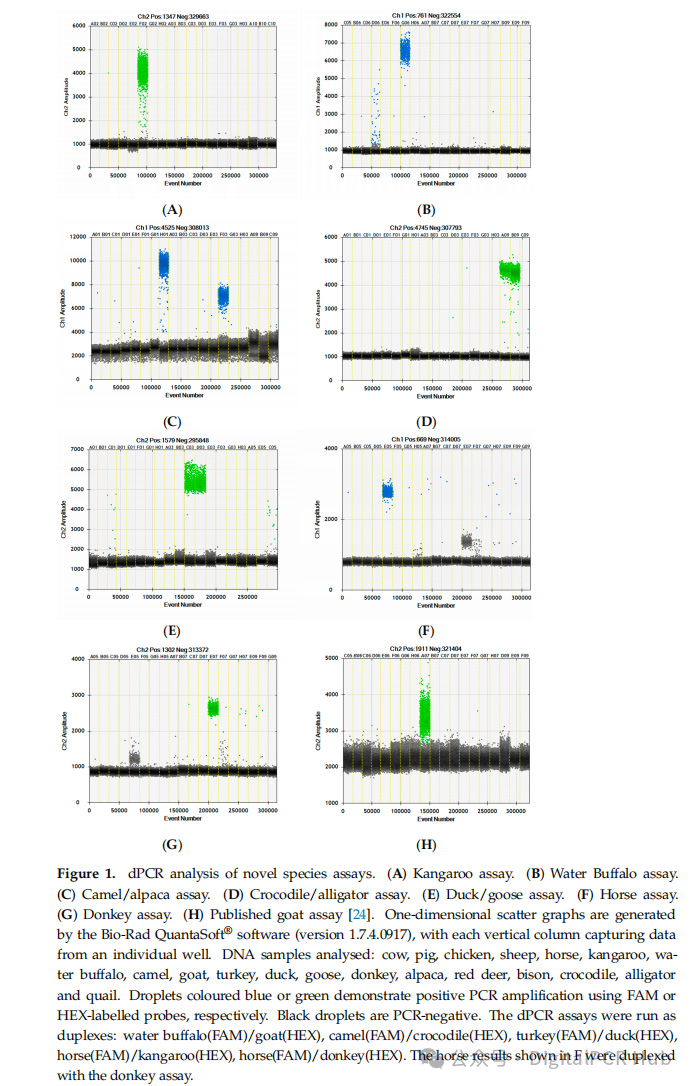
Recent studies have seen the development of seven new dPCR assays designed to detect specific animal species, including horse, donkey, duck, kangaroo, camel, buffalo, and crocodile. These assays, along with a reference material, support the quantitative measurement of species ratios in food and feed products. The introduction of these new methods broadens the application of dPCR in food testing, enhancing the accuracy and reliability of detection.
🔍 Research Progress
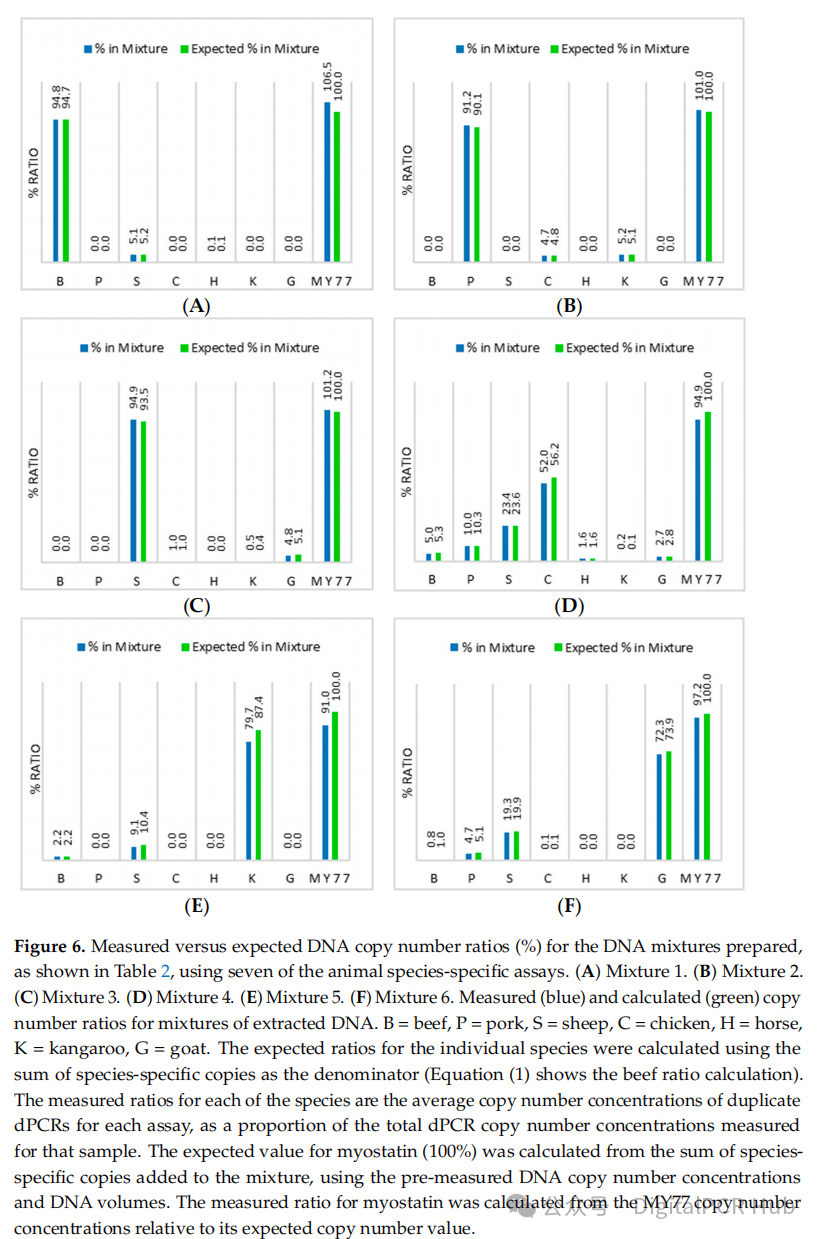
The research team successfully utilized dPCR to achieve absolute quantification of meat DNA, even in samples with as little as 0.1% content. A key feature of this technology is its ability to provide additional information on the relative quantity of specific meat species by measuring single-copy nuclear targets, aiding in the identification and quantification of different meat components in food.
🧪 Application Cases
In food processing, such as cooking, canning, or converting into meat and bone meal (MBM), DNA can become damaged or degraded, potentially affecting the sensitivity and accuracy of dPCR detection. The study revealed that by employing an improved myostatin gene assay as a positive control, the yield and purity of extracted DNA could be monitored, and other meat types not detected by species-specific assays could be identified.
📊 Results Analysis
The study demonstrated that dPCR could accurately measure meat species ratios in highly pure and high-quality genomic DNA mixtures, even at 0.1% concentration. Furthermore, the use of synthetic DNA reference materials (RMs) provided a standardized positive template control for commercial testing, enhancing the reliability and comparability of test results.
🌐 Animal Welfare and Food Ethics
This research represents not only a technological breakthrough but also a significant advancement in food ethics and animal welfare. By precisely identifying and quantifying animal-derived components in food, it helps ensure the transparency and authenticity of food labeling, protecting consumer rights while also fostering ethical scrutiny of animal product sources.
If university research institutes and food safety research institutes need PCR systems and Animal species Identification Kits, please click: Gentier 96E/96R Real-Time PCR System