Since the outbreak of SARS-CoV-2, the global demand for highly sensitive and reliable virus detection methods has surged. Traditional PCR technologies often struggle with interference from multiple pathogens, including coronaviruses, variants, influenza viruses, Mycoplasma pneumoniae, Chlamydia, and seasonal bacterial respiratory infections. This can lead to false negatives and positives, making accurate virus identification challenging and increasing healthcare costs.
In response to these challenges, the new Fully Automated Multiplex Pathogen Molecular Diagnostic PCR System P8000 represents a significant advancement in diagnostic technology. This system integrates magnetic bead-based nucleic acid extraction with real-time fluorescence PCR, addressing the limitations of traditional methods and setting a new benchmark in pathogen detection.
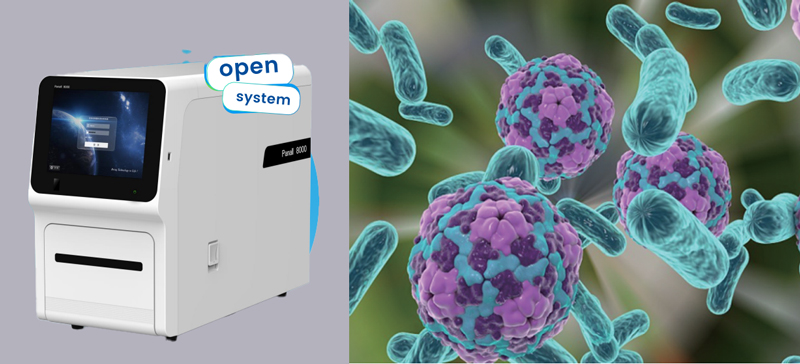
Key Advancements in Diagnostic Technology
The P8000 system introduces several critical improvements for precise pathogen detection:
Magnetic Bead-Based Nucleic Acid Extraction: Utilizes magnetic bead technology to efficiently extract nucleic acids, significantly reducing the risk of cross-contamination and false positives. This method enhances the accuracy and reliability of test results.
Real-Time Fluorescence PCR: Employs advanced fluorescence PCR technology for real-time amplification and detection of nucleic acids. This enables accurate identification of a broad range of pathogens, including:
Influenza A virus, Influenza B virus, Respiratory syncytial virus A, Respiratory syncytial virus B, Influenza A virus H3, Influenza A virus H1, Influenza B virus BV, Influenza B virus BY, Adenovirus, Rhinovirus, COVID-19 lab&N, Metapneumovirus, Parainfluenza virus 1, Parainfluenza virus 2, Parainfluenza virus 3, Parainfluenza virus 4, Coronavirus OC43, Coronavirus HKU1, Coronavirus 229E,
Coronavirus NL63, Coronavirus MERS, Bocavirus, Streptococcus pneumoniae, Mycoplasma pneumoniae, Chlamydia pneumoniae, Staphylococcus aureus, Pneumocystis jiroveci, Streptococcus pyogenes, Moraxella catarrhalis, Legionella pneumophila, Haemophilus influenzae, Klebsiella pneumoniae, Bordetella pertussis, Bordetella hominis, Human herpes virus 6, Herpes zoster virus, Varicella zoster virus, Measles virus, Cytomegalovirus, Epstein-Barr virus, Enterovirus, Parechovirus, Enterovirus D68
In the future, rich kits will be launched to provide testing for meningoencephalitis, parasites, virus typing and mutation, etc.
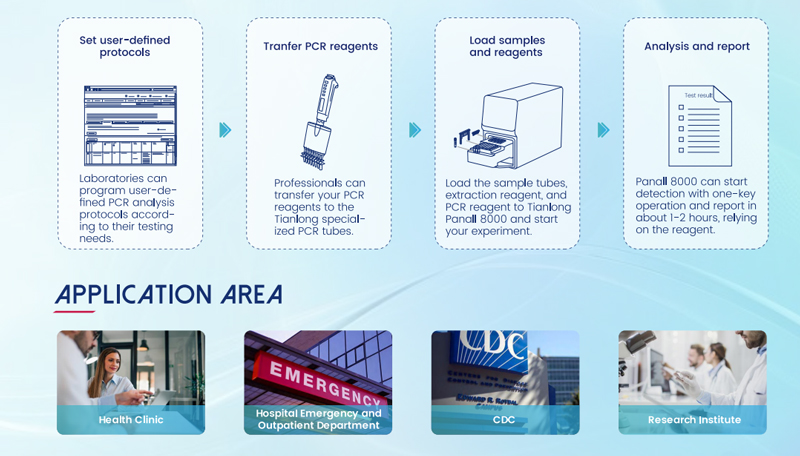
Clinical Application and Benefits
The P8000 system offers numerous benefits for clinical settings:
Enhanced Accuracy: Reduces false negatives and positives, improving diagnostic precision and patient outcomes.
Comprehensive Testing: Allows simultaneous detection of multiple pathogens, streamlining the diagnostic process and reducing the need for multiple tests.
Rapid Results: Delivers results in approximately 2 hours, facilitating timely diagnosis and treatment.
Cost-Effectiveness
The P8000 system presents several cost benefits:
Reduced Diagnostic Costs: Integrates multiple functions into a single device, lowering overall testing costs.
Operational Efficiency: Automates processes, reducing labor and minimizing error rates, which enhances workflow efficiency and reduces operational expenses.
Lower Healthcare Costs: Early and accurate detection helps prevent the spread of infections and reduces the need for costly treatments and hospitalizations.
Advanced Safety Features
The P8000 system incorporates several safety features to ensure accurate and reliable testing:
Directional Ventilation: Design minimizes cross-contamination by controlling airflow during experiments.
Negative Pressure System: Maintains internal negative pressure to prevent contamination.
HEPA Filtration: Equipped with removable HEPA filters for effective air filtration.
UV Disinfection: Two ozone UV lamps disinfect the chamber post-experiment.
Shortest Fixed Travel: Optimizes sample processing time with minimal movement.
Monitoring Alerts: Alerts users to errors in sample or reagent placement.
Additionally, the P8000 employs proprietary RMT technology patent to reduce aerosol generation by over 50% compared to traditional methods, effectively controlling cross-contamination and enhancing result accuracy.