Exhaled Nitric Oxide Pulmonary Function Pneumonia Analyzer


- Point of origin
- China CE ISO13485 ISO9001
- Testing item
- Pulmonary function molecular diagnosis,
- Throughput
- 3-5min
- Application scenarios
- clinic,hospital,CDC,Respiratory
Exhaled Nitric Oxide Analyzer Carbon Monoxide Pulmonary Function Assessment System
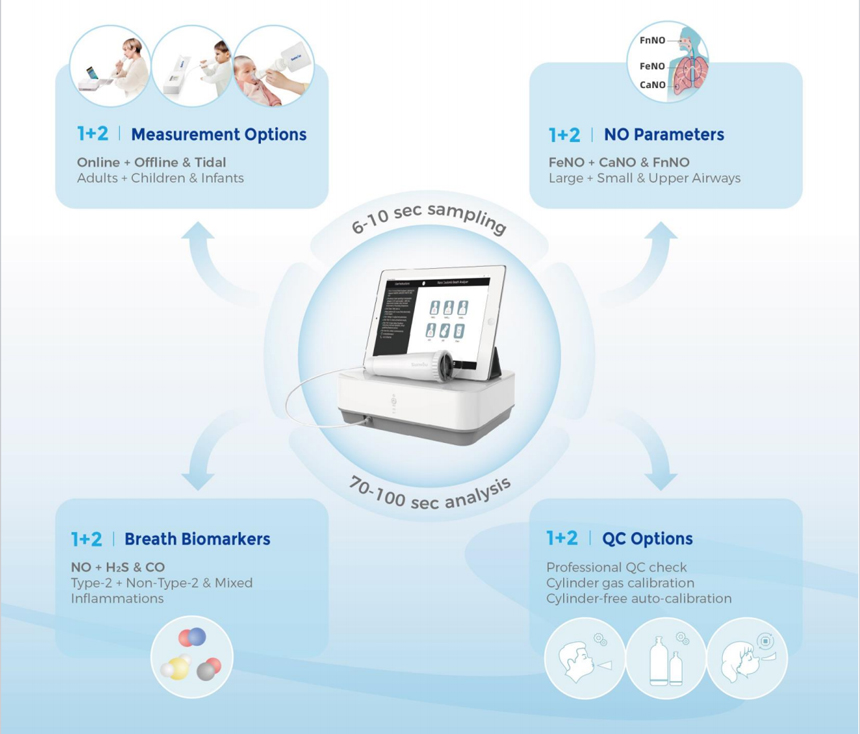
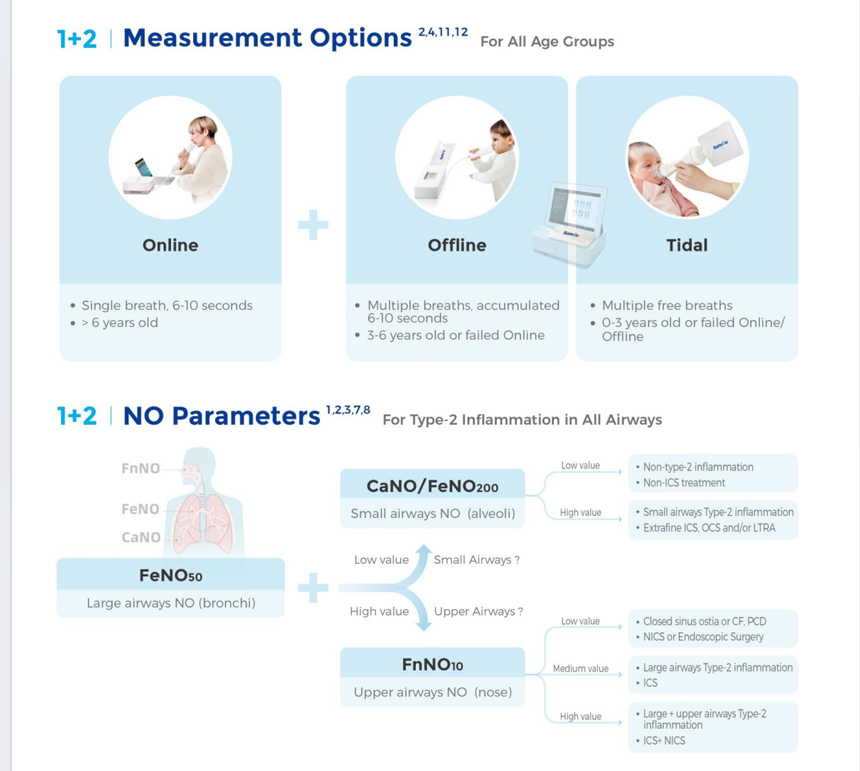
Exhaled Nitric Oxide Analyzer not only supports three exhalation modes—oral, nasal, and mouth-nose—but also facilitates the collection of three key gases: Nitric Oxide (NO), Carbon Monoxide (CO), and Hydrogen Sulfide (H2S). Furthermore, it boasts three intelligent sampling modes: online, offline, and moisture, making it adaptable to diverse clinical settings.
Exhaled Nitric Oxide Analyzer versatility extends to its diagnostic applications, enabling it to target three diseased parts: the lungs, the nose, and systemic inflammation. By providing precise measurements of exhaled gases, this innovative analyzer empowers medical professionals to pinpoint the origins of respiratory issues with unparalleled accuracy.
Departments Benefiting from the System:
The Exhaled Nitric Oxide Analyzer Carbon Monoxide Pulmonary Function Assessment System finds its utility across various medical departments, including Respiratory Medicine, Pediatrics, and Otolaryngology. In Respiratory Medicine, it serves as an indispensable tool for monitoring and managing conditions such as asthma and chronic obstructive pulmonary disease (COPD). For Pediatric specialists, it offers a non-invasive means of assessing lung function in children, where traditional tests may be challenging or impractical. Additionally, Otolaryngologists can leverage this system to diagnose and treat conditions affecting the nose and sinuses, such as allergic rhinitis and infantile sinusitis.
Diagnosis Capabilities:
The system's ability to detect variations in NO, CO, and H2S levels enables it to aid in the diagnosis of numerous respiratory conditions. Asthma, a common inflammatory disease characterized by airway constriction, can be monitored through changes in NO levels. COPD, a progressive lung condition causing airflow limitation, shows distinct patterns in CO and H2S concentrations. Chronic cough, often associated with underlying inflammatory processes, can be evaluated through consistent NO measurement trends. Interstitial lung diseases, which affect the lung tissue itself, are identifiable through abnormal gas readings, while asthmatic rhinitis and primary ciliary dyskinesia can be diagnosed through a combination of oral and nasal exhalation assessments.
| Concentration Range | 0-3000ppb |
| Display | Connect PC to Display |
| Detection Principle | Electrochemical Sensor |
| Repeatability | Relative Standard Deviation ≤±10% |
| Accuracy | ±3ppb of Measured Value < 50ppb ±10% of Measured Value ≥ 50ppb |
| Power Plug | Input: 100-240V~50-60Hz, 0.6A Output: 24V, 1.04A |
| Lower Limit of Detection | 3ppb |
| Linearity | >0.96 |
| Flow Rate | FeNO5o:50±10%ml/s、 FeNO2oo:200±10%ml/s、FnNO10:10ml/s |
| T90 Response Time | ≤10 seconds |
| Operating Temperature | 5-35C |
| Storage/Transport Temperature | -40-55C |
| Operating/Storage/Transport Pressure | 700hpa-1060hpa |
| Operating Humidity | s80% RH (non-condensing) |
| Storage/Transport Humidity | ≤93% RH (non-condensing) |
| Device Operating ife | 5 years (Subject to correct use and maintenance). Tested up to 50.000 tests |
| Sensor Operating Life | - 2 years (Subject to correct use and maintenance) ested up to 50,000 tests. |
| Sensor Sensitivity | 1ppb |
| Sensor Drift | Relative Drift ≤ ±10% for tests within 2 hours |
The Exhaled Nitric Oxide Analyzer Carbon Monoxide Pulmonary Function Assessment System represents a significant leap forward in respiratory health monitoring. Its multifaceted approach to exhalation modes, gas collection, and sampling methods provides a comprehensive framework for accurate diagnosis and effective treatment planning. With its broad applicability across various medical departments and conditions, this system stands as a testament to the ongoing evolution of medical technology, offering hope and improved quality of life for those grappling with respiratory illnesses.
Applied Departments: Respiratory Department, Pediatrics, Otolaryngology
Indications: Asthma, COPD, chronic cough, interstitial lung disease, wheezing rhinitis, sinusitis in infants and young children, primary ciliary dyskinesia